
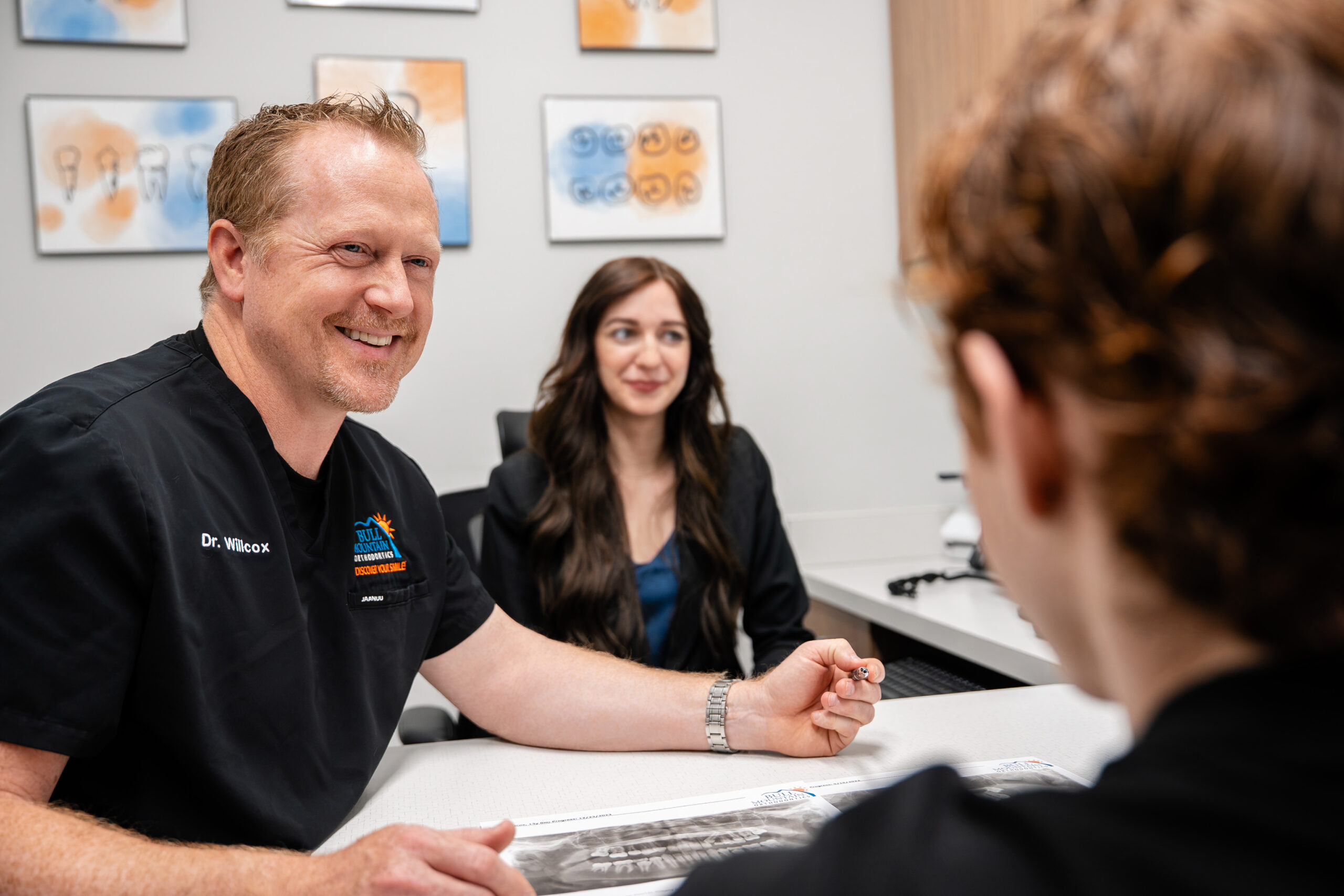
Finding the right orthodontist can shape the next year or two of your life, and the smile you’ll wear for decades. This guide walks you and your family through what an orthodontist actually does, how treatment works, and how to know when it’s time to schedule a free consultation. At Bull Mountain Orthodontics, Dr. Bryce Willcox and our team have spent more than two decades helping families discover their best smiles.
What Does an Orthodontist Do?
An orthodontist is a dental specialist who diagnoses and corrects misaligned teeth and jaws. After dental school, an orthodontist completes 2-3 additional years of specialty residency focused exclusively on tooth movement, bite correction, and facial development. That extra training is what separates orthodontic care from general dentistry and shapes the treatment options available to you.
How Does an Orthodontist Differ From a General Dentist?
A general dentist handles cleanings, fillings, and routine oral health. An orthodontist focuses specifically on how your teeth fit together and how your jaw functions. While some general dentists offer aligners, a specialist like Dr. Willcox has the residency training and clinical experience to manage everything from straightforward spacing to surgical jaw cases.
What Conditions Does an Orthodontist Treat?
Dr. Willcox and our team regularly help you and your family with:
- Crowding when teeth don’t have enough room to sit straight
- Spacing or gaps between teeth
- Overbite where upper teeth sit too far over the lower
- Underbite where lower teeth extend past the upper
- Crossbite where upper and lower teeth don’t meet correctly
- Open bite where teeth don’t touch when the mouth closes
What Treatment Options Are Available?
At our clinic, treatment options include traditional metal braces, clear braces, Invisalign®, and Invisalign Teen. Every plan is built around your goals, your schedule, and your bite.
Why Does Specialized Care Matter?
Properly aligned teeth aren’t just about looks. A balanced bite reduces strain on your jaw joints, makes brushing and flossing easier, and protects the long-term health of your enamel. Specialized orthodontic training is what makes those outcomes predictable.
Curious where to start? A free consultation with Dr. Willcox is one simple way to learn more. You’ll get a clear picture of your options before deciding anything.
How Does Orthodontic Treatment Work, Step by Step?
Orthodontic treatment follows a predictable five-step process: initial consultation, diagnostic records, custom treatment plan, active treatment with braces or Invisalign®, and a retention phase with retainers. Each step builds on the last to move your teeth safely into their ideal positions and keep them there for the long haul.
Here’s what to expect when you start treatment with Dr. Willcox and our team:
Free Consultation. Your first visit at our clinic is relaxed and informative. Dr. Willcox examines your teeth and bite, listens to your goals, and discusses whether treatment makes sense now or later.
Diagnostic Records. If you move forward, we gather a complete set of records. This includes digital X-rays, intraoral and facial photos, and a 3D digital scan of your teeth. No messy impressions.
Custom Treatment Plan. Dr. Willcox studies your records and builds a plan tailored to your bite, your timeline, and your preferences. We’ll walk you through the options, show you projected outcomes, and explain flexible monthly payment options before anything begins.
Appliance Placement. Depending on your plan, you’ll be fitted with traditional braces, clear braces, or you’ll pick up your first set of Invisalign® trays. This visit is longer than future ones and gives our team time to make sure everything fits comfortably.
Regular Check-In Visits. During active treatment, you’ll see us every 4-8 weeks for adjustments or to pick up new aligner trays. These visits are short, usually 15-30 minutes, and let Dr. Willcox track progress and make small refinements.
Retention Phase. Once your teeth are in their new positions, we move into retention. You’ll wear retainers, full-time at first and then nights only, to protect your results. According to the American Association of Orthodontists, retainer wear is essential because teeth naturally try to shift throughout life.
Most treatments run 12-24 months, though simple cases can finish sooner and complex bites may take longer. Dr. Willcox will give you a realistic timeline at your free consultation.
What Are the Benefits of Seeing a Local Orthodontist?
Choosing a local orthodontist offers more than convenience. It builds a long-term relationship with a specialist who knows your bite, your history, and your goals. For families nearby, that local connection means easier scheduling, faster help when something feels off, and a team that genuinely invests in your results.
How Does a Local Orthodontist Improve Your Care?
Here are the biggest benefits of working with a local orthodontist like Dr. Willcox:
- Better oral health. Straight teeth are easier to brush and floss, which reduces your risk of cavities and gum disease over time.
- Improved bite function. Correcting an overbite, underbite, or crossbite reduces uneven wear on your enamel and can ease jaw strain.
- Confidence that lasts. A smile you’re proud of changes how you show up in photos, interviews, and everyday conversations.
- Quick access for adjustments. A broken bracket or lost aligner doesn’t have to derail your week when your clinic is right in town.
- Emergency care nearby. When something unexpected happens, you want a familiar team minutes away, not hours.
- Early intervention for kids. Local follow-up makes two-phase treatment, where younger children receive early guidance before full braces in their teens, much easier to manage.
That last point matters more than most families expect. Catching things early can save time and money later.
Why Do Credentials and Community Roots Matter?
Bull Mountain Orthodontics serves families across the greater Portland area, including Lake Oswego and Beaverton. As a member practice of the American Association of Orthodontists, our team is committed to ongoing education and the standards that protect you. Those kinds of credentials reflect a real investment in staying current with the field.
Comparing Orthodontic Treatment Options
Not every treatment is right for every smile. The main options at our clinic, traditional braces, clear braces, and Invisalign®, each have specific strengths. The right choice depends on your case complexity, lifestyle, age, and what feels comfortable to you. It’s a personal decision.
What Are Traditional Metal Braces?
Metal braces remain the most popular choice for orthodontic treatment. Today’s versions are significantly smaller, sleeker, and more comfortable than older models. They’re effective for nearly every case, including complex bite corrections.
What Are Invisalign® and Invisalign Teen?
Invisalign® and Invisalign Teen use clear, removable trays to straighten your smile without metal in your mouth. Trays come out for meals, brushing, and special events. Invisalign Teen includes compliance indicators and replacement trays built in for growing teens. Dr. Willcox and our team work with clear aligner cases regularly.
At your free consultation, Dr. Willcox can walk you through which options fit your case and lifestyle best.
How Do We Compare to Other Orthodontists in the Area?
When families research orthodontic care, they often weigh several local practices side by side, comparing names they find in a quick search. That kind of homework is smart. What sets one practice apart from another usually comes down to a few things: the range of treatment options, the experience of the specialist, the comfort of the clinic, and how well the team communicates with you and your family.
Some practices focus on a single treatment type, while others offer a fuller menu. Bull Mountain Orthodontics provides metal braces, clear braces, and Invisalign® under one roof, so your plan is matched to your bite rather than to whatever a clinic happens to specialize in. We’d encourage you to compare. Read reviews, visit a couple of clinics, and ask each team how they handle emergencies and financing. The right fit is the one where you feel heard.
Are You a Candidate for Orthodontic Treatment?
Most people, from age 7 to retirement, are candidates for some form of orthodontic care. The right time depends on your age, your bite, and your goals. Dr. Willcox evaluates each case individually, but here’s a general guide to who benefits from treatment and when.
When Should Children See an Orthodontist?
The American Association of Orthodontists recommends a first orthodontic evaluation by age 7. At this age, enough permanent teeth have come in for Dr. Willcox to spot developing issues like crossbites, severe crowding, or jaw growth concerns. Early evaluation doesn’t always mean early treatment. Sometimes it means monitoring growth so the right intervention happens at the right moment, often called two-phase treatment.
What About Treatment for Teens?
The teen years are the most common time for full orthodontic treatment. Most permanent teeth are in place, growth is still happening, and treatment options like Invisalign Teen and clear braces fit well with school and social life.
Can Adults Get Orthodontic Treatment?
Adult orthodontics is more popular than ever. Discreet options like Invisalign® let you straighten your smile without changing how you look at work or in social settings. It’s never too late to invest in your smile, and families across the greater Portland area, from Lake Oswego to Beaverton, are doing exactly that.
What Are the Signs You May Benefit From Treatment?
You might be a candidate if you notice:
- Visibly crowded or overlapping teeth
- Noticeable gaps or spacing
- Difficulty biting or chewing
- Jaw clicking or fatigue
- Teeth that didn’t fully come in
- A bite that doesn’t line up when you close your mouth
For severe cases involving jaw alignment, Dr. Willcox may coordinate with an oral surgeon for surgical orthodontics. These cases combine braces or aligners with jaw surgery for a complete result.
Frequently Asked Questions About Orthodontic Care
How long does orthodontic treatment take?
Most orthodontic treatments take 12-24 months, though some mild cases finish in under a year and complex bite corrections can take longer. Your exact timeline depends on the treatment type, your case complexity, and how consistently you follow Dr. Willcox’s instructions, especially for Invisalign® wear time.
What is the best age to see an orthodontist?
The American Association of Orthodontists recommends a first orthodontic evaluation by age 7. Early evaluation lets Dr. Willcox catch developing issues while the jaw is still growing. That said, teens and adults make up a large share of patients, so it’s never too late to schedule a free consultation.
Does insurance cover braces or Invisalign®?
Many dental insurance plans include orthodontic benefits, often as a lifetime maximum that applies to braces or Invisalign®. Coverage varies widely by plan. Our team will verify your benefits before treatment begins and combine them with flexible monthly payment options to make the monthly cost manageable.
How often are appointments needed?
During active treatment, expect a visit every 4-8 weeks. Adjustment appointments for braces are typically 15-30 minutes. Invisalign® check-ins are often shorter since you progress through trays at home. Retention visits after treatment are spaced further apart.
What should I do in an orthodontic emergency?
Most orthodontic emergencies, like a loose bracket or a poking wire, are uncomfortable but not urgent. Call our clinic and we’ll guide you through temporary fixes and schedule a quick visit. For trauma to the mouth or severe swelling, seek immediate medical care first, then contact us.
Do I need retainers after treatment?
Yes. Retainers are essential to protect your results. Teeth naturally try to shift throughout life, and consistent retainer wear, full-time at first and then nights only, keeps your smile in place. Dr. Willcox will walk you through the retainer routine that fits your case.
If you’re thinking about your next step, Dr. Bryce Willcox and our team at Bull Mountain Orthodontics are here whenever you’re ready. A free consultation is a relaxed way to explore your options, ask every question on your mind, and learn what the comfortable, relaxing, and fulfilling orthodontic journey toward a smile you’ll love might look like for you and your family. Learn more about a free consultation.