
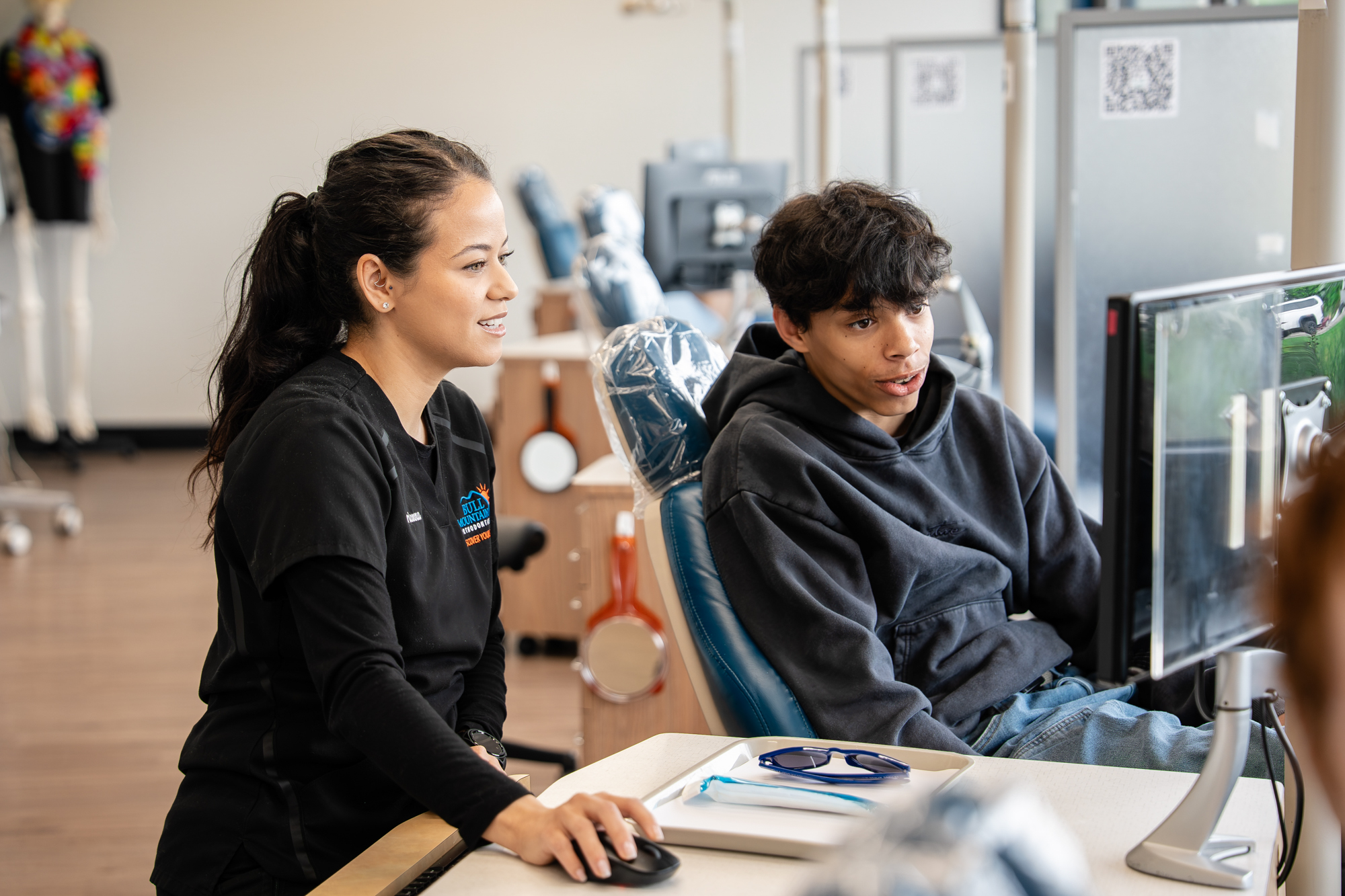
Airway orthodontics is an approach to orthodontic care that considers how jaw width, tongue posture, and tooth position affect a child’s breathing. Instead of focusing on straight teeth alone, Dr. Willcox evaluates the upper airway, nasal passages, and oral space, then plans treatment that supports both a healthy bite and easier breathing.
Parents ask us this often, and the short answer is that it may help, especially during the years when the palate and jaws are still growing and can be guided. Because a child’s upper jaw is made of two halves that haven’t fully fused, gentle widening can create more room for the tongue and a broader nasal floor at the same time.
One important boundary: orthodontists do not diagnose sleep apnea or any medical sleep condition. We screen, we ask questions, and we share what we see with your child’s pediatrician, ENT, or sleep physician. Diagnosis belongs to the medical team, and treatment works best when everyone is looking at the same picture.
You may also hear this described as airway-focused orthodontics, airway-centric care, or breathing-conscious treatment. The labels differ, but the underlying idea stays the same: teeth, jaws, and breathing are connected, and growth gives us a window to work with.
How Does Airway Orthodontics Work?
Airway orthodontics at our Tigard office follows a screening-first process. Dr. Willcox reviews sleep and breathing history, examines the palate, tonsils, tongue posture, and bite, then gathers imaging records. When a medical diagnosis may be needed, we refer out. A treatment plan takes shape only after that, usually with growth monitoring built in.
Here’s what the process typically looks like at Bull Mountain Orthodontics:
- Screening exam and airway history. We ask about snoring, gasping, mouth breathing, restless sleep, teeth grinding, and daytime tiredness. Parents notice these things long before we do, so what you notice really matters.
- Clinical evaluation. Dr. Willcox checks palate width, crowding, tonsil size, tongue resting posture, lip seal, and how the upper and lower teeth fit together.
- Diagnostic records. Panoramic and cephalometric imaging or a 3D digital scan gives us a clear look at developing teeth, jaw relationships, and skeletal growth patterns.
- Medical referral when appropriate. If findings suggest sleep-disordered breathing, enlarged tonsils or adenoids, or chronic nasal obstruction, we coordinate with your pediatrician, an ENT, or a sleep physician before moving ahead.
- Treatment planning. Many airway orthodontics plans start with interceptive care for growing children, often palatal expansion, followed later by alignment once most permanent teeth have come in.
- Growth monitoring visits. Between phases, we see your child periodically to track eruption and jaw development. These visits are short, low-key, and part of our fun, welcoming atmosphere.
Not every child who comes in for a screening needs treatment. Plenty of families leave with a monitoring plan and nothing more, which is a perfectly good outcome.
What Are the Benefits of Airway Orthodontics for a Growing Child?
Widening a narrow upper jaw while growth is still happening can change more than tooth alignment. The palate forms the floor of the nose, so expansion tends to affect both the mouth and the nasal space above it. Timing matters more here than almost anything else.
That connection is the reason airway orthodontics looks at the palate before it looks at the front teeth. A narrow arch guided wider at age eight is a very different situation from the same narrow arch at age fifteen, once the two halves of the palate have knit together and widening asks considerably more of the appliance and of your child.
Possible benefits include:
- More room for the tongue, which supports a resting posture up against the palate rather than low in the mouth
- A wider nasal floor, which often makes nasal breathing feel more natural than habitual mouth breathing
- Reduced crowding, which in many cases lowers the likelihood that permanent teeth will need to be removed later
- Correction of crossbites and narrow arches while the mid-palatal suture is still open and responsive
- Better bite function, which makes chewing and speaking more comfortable
- Confidence during the school years, when kids notice their smiles and their sleep quality more than they let on
A realistic note: these benefits are supportive, not curative. Expansion is not a guaranteed fix for pediatric sleep apnea, and no ethical practice should promise that. What orthodontic care can do is address the structural piece of the picture while a physician handles the medical side.
How Is Airway Orthodontics Different From Traditional Orthodontics?
The two approaches overlap far more than they differ. Both use braces and Invisalign®, and both finish with a stable, functional bite. The difference sits mostly in what gets evaluated up front and when treatment begins.
Think of airway orthodontics as traditional orthodontics with a wider lens and an earlier start. A child who begins with Phase 1 expansion still needs alignment later. That second phase is frequently shorter and simpler because the foundation was addressed first.
One more practical difference worth knowing about: airway orthodontics usually involves more back-and-forth with the rest of your child’s care team, which means shared records, a few extra phone calls, and occasionally a pause in the schedule while a physician weighs in on something we’ve flagged.
What Are the Signs Your Child May Be a Candidate?
Some signs show up at night. Others show up at the breakfast table or in a teacher’s note home. None of them confirm a diagnosis on their own, but together they’re worth mentioning at an airway orthodontics screening visit.
Watch for:
- Snoring, gasping, or restless sleep on most nights, along with unusual sleeping positions or frequent waking
- Habitual mouth breathing, chronically chapped lips, or dark circles under the eyes
- A narrow, high-arched palate, a crossbite, or crowding that seems advanced for your child’s age
- Daytime fatigue, trouble focusing, irritability, or bedwetting past the typical age
- Enlarged tonsils or adenoids noted by your pediatrician or ENT
- Difficulty closing the lips at rest, or a tongue that consistently sits low in the mouth
Patterns matter more than single events here. A stuffy week during allergy season is a different story from a habit that repeats month after month, which is why we ask you to think back across seasons rather than days.
The American Association of Orthodontists recommends that every child have a first orthodontic check by age 7. By then, enough permanent teeth have come in for Dr. Willcox to spot developing crossbites, narrow arches, and growth patterns that are easier to guide now than to correct later. An early check doesn’t mean early treatment. It means someone is watching at the right time.
If your pediatrician has already raised concerns about your child’s sleep or breathing, bring that information along. The more we know, the better the screening.
Adults notice some of these same patterns in themselves, and the conversation is worth having even though the palate has long since fused. Treatment looks different once growth is finished, and it often means working alongside a physician rather than guiding development, but an evaluation still tells you what you’re dealing with.
Talk It Through With Dr. Willcox
If any of these signs sound familiar, a screening visit is a low-pressure place to start. Dr. Bryce Willcox has spent more than two decades caring for growing smiles, and he holds memberships with the American Association of Orthodontists, the American Dental Association, the Oregon Dental Association and the Washington County Dental Society.
A screening visit is mostly conversation. You describe what you’ve noticed at home, we go over anything your pediatrician has already mentioned, and Dr. Willcox looks at the palate, the bite, the tonsils, and how your child breathes at rest. Families who arrive with a few questions written down tend to get the most out of the visit, and children of every growth stage are welcome at our Tigard office, from a first check around age 7 through later alignment.
Every treatment plan is different, so we give you the full picture in writing before anything begins. You can review our financing and insurance options ahead of time if that helps you plan.
Come find out what’s happening and what, if anything, needs attention right now. Schedule a free consultation and we’ll take it from there.
Frequently Asked Questions
At What Age Should Airway Issues Be Evaluated?
Screening can begin as early as ages 6 to 7, which lines up with the AAO recommendation for a first orthodontic check. At that stage, the mid-palatal suture is still open and the jaws are actively growing, so guidance is more effective. Younger evaluations happen too, usually when a pediatrician or ENT flags something specific.
Can Orthodontics Cure Sleep Apnea in Children?
No. Orthodontic treatment is one part of a medical team approach, not a cure. Pediatric sleep apnea is diagnosed by a physician, often with a sleep study, and management may involve an ENT, an allergist, or a sleep specialist. Expansion and airway orthodontics can address the structural contributors within our scope, and we coordinate closely with your child’s medical providers.
Does a Palatal Expander Hurt?
Most kids feel pressure rather than soreness, usually for the first few days and briefly after each turn of the expander. A tingling sensation across the bridge of the nose is common and normal. Soft foods help during the first week, and children adapt to speaking and eating with the appliance faster than most parents expect.
How Long Does Phase 1 Treatment Take?
Phase 1 interceptive treatment commonly runs somewhere in the range of 9 to 12 months of active treatment, followed by a monitoring period. During monitoring, we see your child every several months to track how permanent teeth are erupting. The exact timeline depends on what’s being corrected and how your child’s growth unfolds.
Will My Child Still Need Braces Later?
Often, yes. Phase 1 creates room and corrects skeletal issues, but it doesn’t finish tooth alignment. A second phase with braces or Invisalign® typically follows once most permanent teeth are in, and it’s frequently shorter than it would have been without early intervention.
Is Mouth Breathing Always a Concern?
Occasional mouth breathing during a cold or an allergy flare is normal. Chronic mouth breathing, night after night, deserves an evaluation. It can point to nasal obstruction, enlarged adenoids, or a narrow upper arch, and it may influence how the face and jaws develop over time.