
Choosing between Invisalign vs braces comes down to your bite, lifestyle, and goals. Both treatments correct the same range of orthodontic concerns, but they work differently and suit different patients. At Bull Mountain Orthodontics, Dr. Willcox and our team help you and your family weigh the options so you can choose the one that fits your smile. The right answer is personal. Let’s walk through it together.
What Are Invisalign and Braces?
Invisalign and braces are two proven orthodontic treatments that straighten teeth and correct bite issues. Traditional braces use small brackets bonded to your teeth and connected by wires that gradually shift teeth into place. Invisalign uses a series of clear, removable, custom-made aligners that move teeth in small, planned stages. Both reach the same destination by different routes.
Both methods address the same concerns, including:
- Crowding and overlapping teeth
- Gaps and spacing
- Overbite, underbite, and crossbite
- Open bite and midline issues
We also offer the Damon Smile self-ligating bracket system. Damon brackets are a low-friction alternative to standard braces that can make treatment more comfortable for many patients. It’s a nice middle ground.
No matter which option you choose, both require professional orthodontic supervision. Dr. Willcox, an orthodontist and a member of the AAO, ADA, Oregon Dental Association, and Washington County Dental Society , oversees every step so your teeth move safely and predictably. That oversight matters more than the tools.
How Each Treatment Works
Both treatments apply gentle, steady force to guide teeth into place. Braces use brackets and wires bonded to your teeth and tightened over time. Invisalign uses a custom series of removable aligners mapped out by a digital plan, with each tray nudging teeth a little closer to the goal. The mechanics differ, but the principle is the same.
Here’s a closer look at each process:
How braces work:
- Brackets are bonded to the front of each tooth.
- A thin archwire connects the brackets and applies steady pressure.
- You return for adjustment visits every 4 to 8 weeks , where the wire is tightened or swapped.
- Elastics or other attachments may be added to correct bite issues.
How Invisalign works:
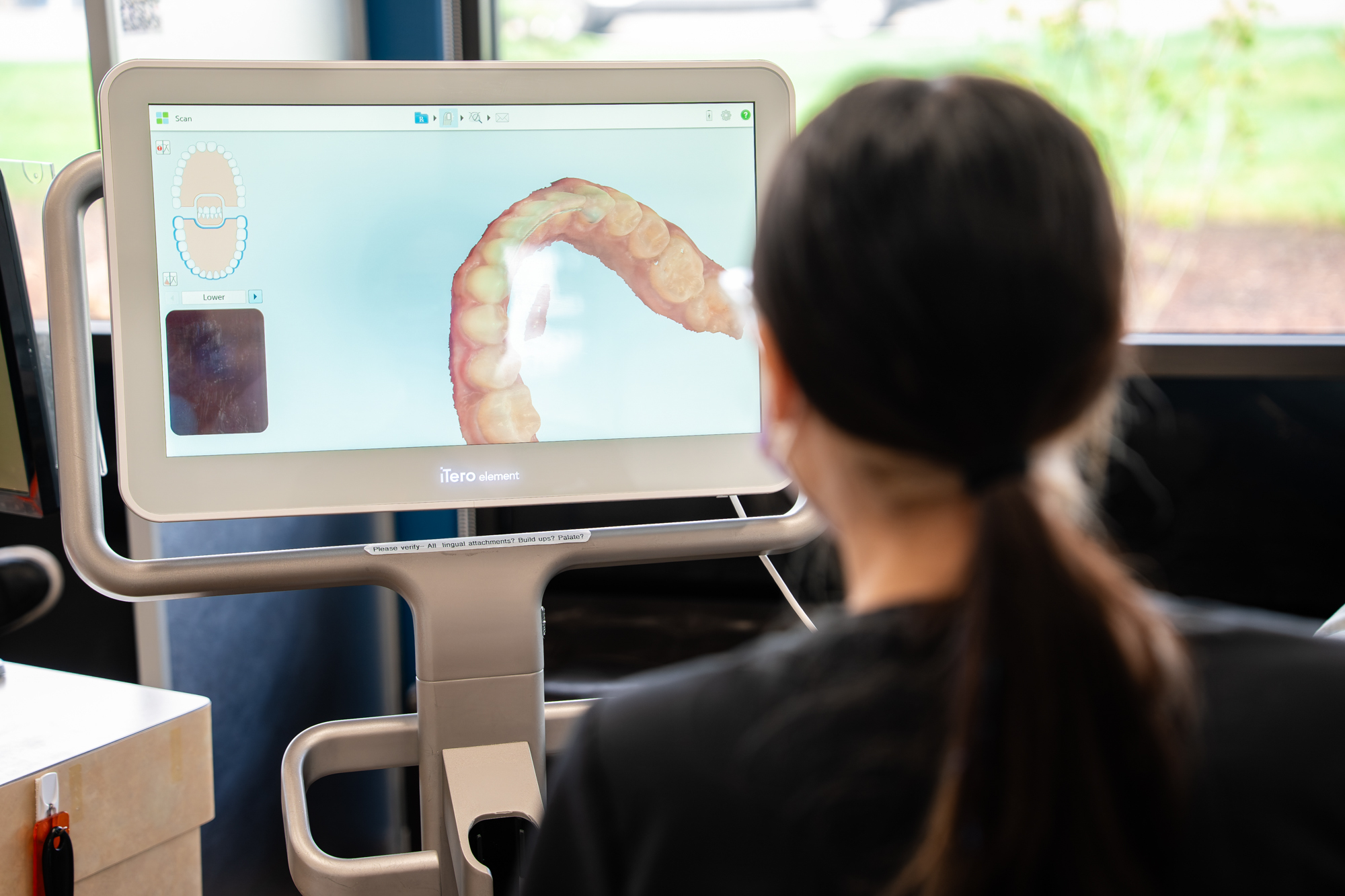
- Dr. Willcox takes a digital 3D scan of your teeth.
- A custom treatment plan is mapped out, showing each stage of movement.
- You receive a series of clear aligners and swap to the next set every 1 to 2 weeks .
- Brief check-in visits happen every 6 to 10 weeks to track progress.
Braces apply continuous force around the clock. Aligners apply staged force, with each tray guiding teeth a fraction closer to the final goal. Both options typically take 12 to 24 months , depending on case complexity. For patients who want to shorten total treatment time, both systems can pair with Propel accelerated treatment technology.
Benefits of Invisalign vs Braces
Each treatment brings real advantages, and the best choice depends on what matters most to you. Some patients prioritize appearance and flexibility. Others want a fixed system that works without daily decisions. Both deliver excellent results when matched to the right case.
Benefits of Invisalign:
- Nearly invisible aligners that fit your lifestyle at work, school, or events
- Removable for eating, drinking, brushing, and flossing
- No food restrictions, since the aligners come out at mealtimes
- Smooth plastic that won’t poke or irritate your cheeks
- Often fewer in-clinic visits, since you change trays at home
- Easier oral hygiene because you brush your natural teeth as usual
Benefits of traditional braces:
- Effective for complex cases including severe crowding, rotations, and bite issues
- Work continuously with no risk of being lost or left out
- No reliance on daily patient compliance
- Strong track record across decades of orthodontic care
- Fun customization options with colored elastics for kids and teens
Benefits of Damon Smile:
- Self-ligating brackets that reduce friction during tooth movement
- Often more comfortable than traditional ties
- May support efficient results in many cases
According to the American Association of Orthodontists, both fixed braces and clear aligners can correct most common orthodontic concerns when supervised by a qualified provider. Dr. Willcox and our team will help you sort through the benefits during your free consultation. No pressure, just honest guidance.
Invisalign vs Braces: Side-by-Side Comparison
When you compare Invisalign and braces side by side, the differences become clear. The table below shows how each option performs across the factors patients ask about most.
A few takeaways from this comparison:
- If discretion matters most, Invisalign is the standout choice.
- If you’d like a system that keeps you on track automatically, fixed braces remove that variable for you.
- If you want a balance of aesthetics and continuous treatment, Damon Smile is worth exploring.
- Maintenance differs, but both options support healthy teeth and gums when you follow Dr. Willcox’s care plan.
Cost Factors for Invisalign and Braces
Invisalign and braces often fall in a similar price range, and the final cost depends on your specific case. Treatment complexity, length, and any added technology all shape the total. There’s no single sticker price. Bull Mountain Orthodontics offers tailored financing options so your treatment fits your budget without sacrificing quality.
Several factors influence the total cost:
- Case severity: Minor alignment costs less than full-bite correction.
- Treatment length: Longer cases require more aligners or adjustment visits.
- Accelerators: Propel and similar technologies may add to the total.
- Retainers: Post-treatment retainers are part of long-term care.
- Add-ons: Attachments, elastics, or specialty brackets can shift pricing.
Insurance benefits and HSA or FSA accounts may apply toward orthodontic care. We also offer flexible payment plans designed to make treatment achievable for you and your family across the Tigard area. The best way to get a clear, personalized estimate is to book a free consultation with Dr. Willcox, where we review your goals and walk through every option in detail. You’ll leave knowing exactly what to expect.
Who Is a Good Candidate for Each?
The right treatment depends on your bite, age, and how committed you are to wearing aligners as directed. Both options produce beautiful results, but each shines in different situations. A hands-on exam helps Dr. Willcox match you with the approach that fits best.
Invisalign tends to work well if you:
- Have mild to moderate alignment or bite concerns
- Want a discreet option for work, school, or social settings
- Are disciplined about wearing aligners 20-22 hours each day
- Prefer the freedom to remove trays for meals and special events
Traditional braces may suit you better if you:
- Have complex bite issues, severe crowding, or significant rotations
- Want a fixed system that doesn’t depend on daily compliance
- Are a younger patient who may forget to wear aligners
- Need precise control over difficult tooth movements
Teens often do well with Invisalign Teen, which includes compliance indicators that change color as the aligners are worn. Younger children may need Two-Phase Treatment to guide jaw growth before full alignment begins, regardless of whether braces or aligners are used later. The only way to know which option is right is with a hands-on orthodontic exam. Dr. Willcox and our team will review your X-rays, scans, and goals to recommend the best fit.
Frequently Asked Questions
Is Invisalign faster than braces?
Treatment time depends on your case, not just the method. Some mild cases finish faster with Invisalign because trays are pre-planned in stages, while complex cases may move more efficiently with braces. Most patients complete treatment in 12 to 24 months with either option.
Does Invisalign hurt less than braces?
Most patients describe Invisalign as more comfortable because the smooth plastic doesn’t rub against cheeks or lips. You may feel mild pressure when switching to a new aligner, just as braces patients feel pressure after adjustments. Both sensations fade within a day or two.
Can Invisalign fix the same problems as braces?
In many cases, yes. Invisalign now treats a wide range of bite and alignment concerns that once required braces, including crowding, gaps, overbites, underbites, and crossbites. Very complex cases may still respond better to fixed braces, which is why an exam with Dr. Willcox is the best starting point.
How long do I wear aligners each day?
You should wear Invisalign aligners 20 to 22 hours every day for the best results. The trays come out only for eating, drinking anything other than water, and brushing or flossing. Consistent wear is the key to staying on schedule and getting the smile you want.
Will I need a retainer after either treatment?
Yes. Retainers are part of every successful orthodontic treatment because teeth naturally try to shift after treatment ends. Whether you finish with Invisalign or braces, Dr. Willcox will fit you with a custom retainer and walk you through a wear schedule that protects your new smile for the long term. It’s the final step that makes all your hard work last.